Whether it’s a corporate conference, product launch, awards ceremony, exhibition or leadership summit, the registration desk is the gateway to the entire event journey. While attendees may only spend a few minutes there, those few minutes often determine how organized, professional and welcoming the event feels.
The most successful event planners understand that registration isn’t simply about checking names off a list. It’s about creating a seamless arrival experience that builds confidence and excitement.
Let’s explore eight ways smart Event Registration Desk Design can elevate guest experience from the very first moment.
1. Design the Arrival, Not Just the Desk
Guests begin forming impressions before they even reach the registration counter.
Clear wayfinding, welcoming entrance branding, approachable staff, and an organized queue create an immediate sense of confidence. Instead of feeling lost or overwhelmed, attendees know exactly where to go and what to expect.
Think of the registration area as the opening chapter of your event story. Every design decision from lighting and signage to music and spatial layout should reflect the event’s identity.
For premium corporate events, the registration zone often mirrors the overall event branding through custom-built counters, digital displays, floral installations and branded welcome walls.
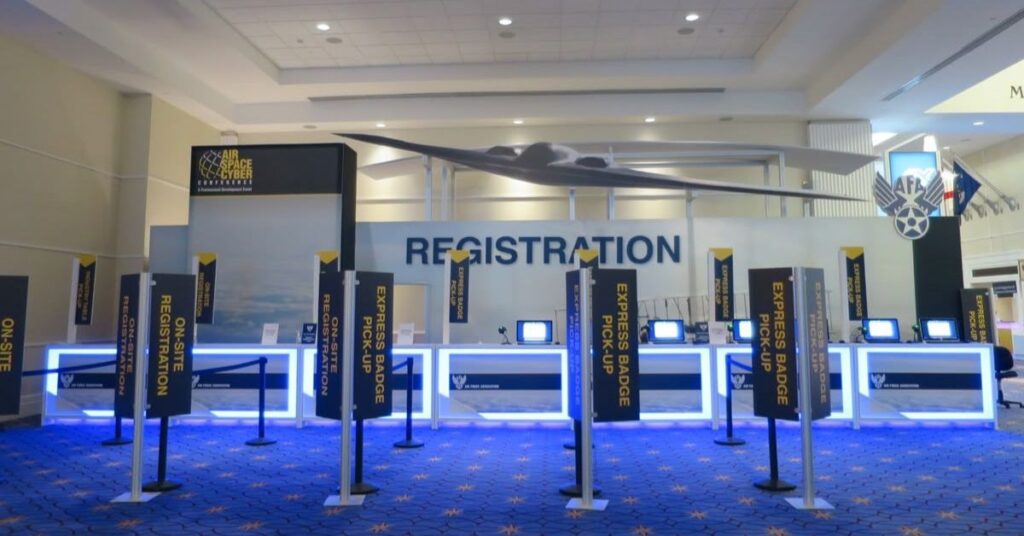
Elegant corporate event entrance with branded registration counters and directional signage, and welcoming staff.
Credits: https://www.shepardes.com/?utm_source=Pinterest&utm_medium=organic
2. Speed Creates Confidence
Nothing dampens excitement faster than waiting in a long registration line.
Today’s attendees expect efficiency. QR-code check-ins, self-service kiosks, digital badge printing and pre-event confirmations help reduce queues while making the process feel effortless.
But speed shouldn’t come at the expense of hospitality.
A quick smile, a warm greeting, and helpful guidance make the experience feel personal rather than transactional. Well-managed registration combines technology with human interaction.
| Traditional Check-in | Modern Registration Experience |
| Long queue | QR code check-ins |
| Manual guest lists | Digital attendee management |
| Printed directions | Interactive wayfinding |
| Generic welcome | Personalized greeting |
3. Registration Should Reflect the Brand
The registration desk is often the first branded environment guests encounter.
Everything from color palettes and graphics to uniforms and welcome kits should align with the event’s visual identity.
For a technology summit, sleek digital interfaces may reinforce innovation. For a luxury product launch, premium materials and elegant detailing communicate exclusivity. A sustainability-focused event might incorporate reusable materials, digital credentials, and eco-conscious signage.
Consistency builds trust.
When every touchpoint reflects the same brand story, attendees perceive the event as more professional and thoughtfully executed.
4. Great Guest Experience Starts With Great Staff
Even the most beautifully designed registration area cannot compensate for an unprepared team.
Registration staff are often the first people attendees interact with, making them ambassadors for the event.
The best teams combine operational efficiency with genuine hospitality. They anticipate questions, resolve issues calmly, and guide guests with confidence.
Simple gestures maintaining eye contact, greeting attendees by name when possible, and offering clear directions leave lasting impressions.
People rarely remember the registration software. They remember how they were treated.
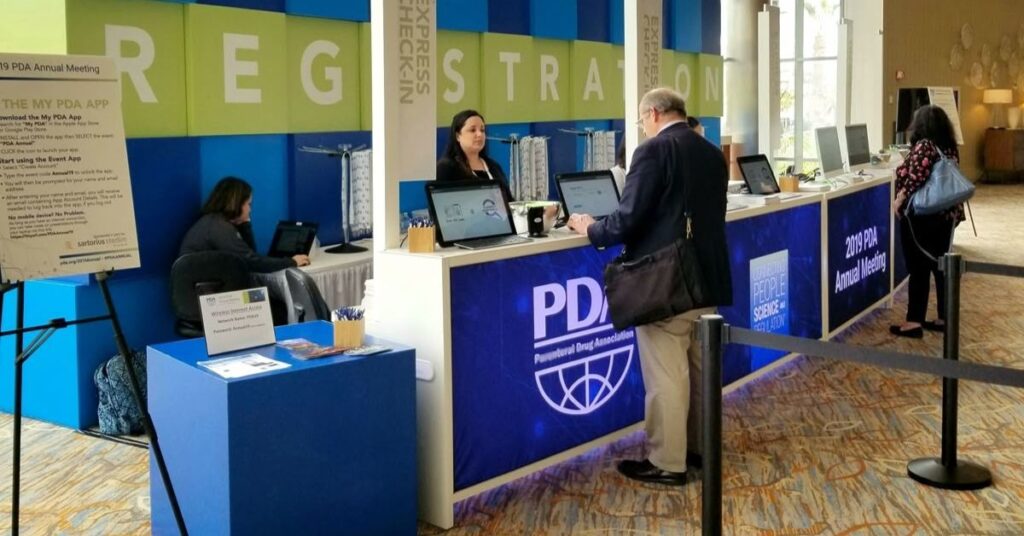
Description: Registration team warmly welcoming guests while assisting with digital check-in.
Credits: https://i.pinimg.com/1200x/4f/f9/ac/4ff9ac2fc861682672c0fe86241ebac5.jpg
5. Small Details Make a Big Difference
Exceptional registration experiences are built through thoughtful details rather than grand gestures. Consider providing:
- Clearly labeled registration counters
- Separate VIP and speaker check-in
- Comfortable waiting areas
- Water stations
- Charging points
- Printed schedules or digital QR guides
These seemingly small additions reduce stress while making attendees feel genuinely cared for. In premium event management, convenience often becomes the strongest form of hospitality.
Also Read: 9 Powerful Event Budget Planning Strategies to Maximize Experience Without Overspending
6. Technology Should Feel Invisible
Technology has transformed event registration, but the best systems are those guests barely notice.
Mobile check-ins, facial recognition, RFID badges, and instant badge printing all contribute to smoother operations but only when implemented thoughtfully.
Technology should simplify the experience, not complicate it. Attendees should spend less time figuring out systems and more time engaging with the event itself.
For event organizers, digital registration also provides valuable real-time insights into attendee flow, arrival times, and operational performance.
7. Create Spaces That Encourage Interaction
Registration doesn’t have to end the moment attendees collect their badges.
Increasingly, organizers are designing arrival zones that encourage networking before the main event begins.
Coffee bars, branded installations, interactive displays, photo opportunities, and informal seating transform registration into an engaging social space rather than a waiting area.
This approach naturally energizes attendees while creating opportunities for meaningful conversations from the very beginning.
At many successful conferences, networking starts before the opening keynote and registration plays an important role in making that happen.
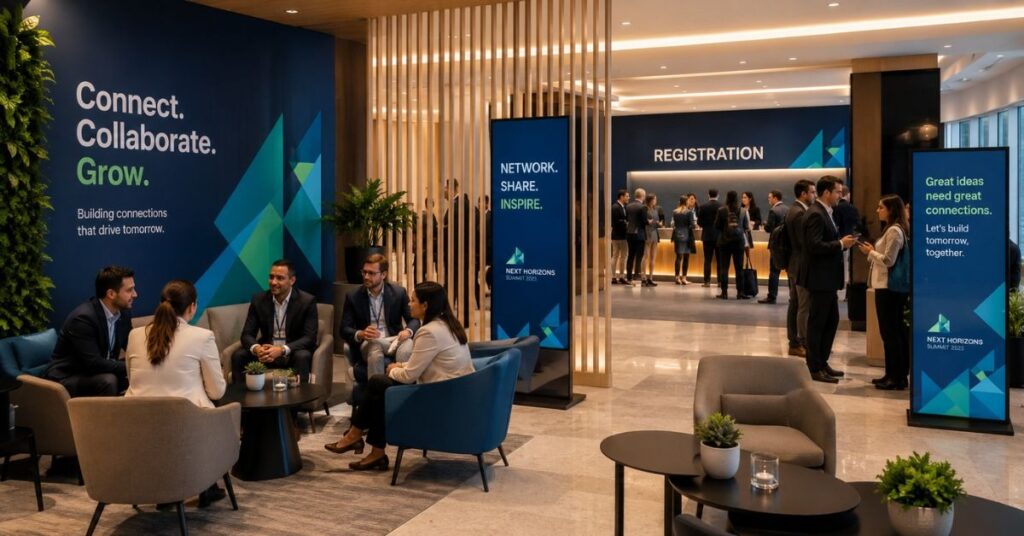
Description: Branded networking lounge adjacent to a registration area where attendees gather before sessions begin.
8. First Impressions Influence the Entire Event
Psychologists often refer to the “primacy effect”, the tendency for people to place greater importance on their first experience. Events are no different.
A welcoming registration experience makes attendees more forgiving of minor delays later in the day, while a frustrating arrival can negatively influence their perception of the entire event.
This is why leading event management companies invest heavily in arrival experience.
Registration isn’t simply the beginning of the event. It becomes part of the event itself.
Registration Design Is Becoming More Experiential
Modern event registration has evolved well beyond functional counters and printed guest lists.
Today, arrival spaces are carefully curated experiences featuring immersive branding, digital interactions, experiential installations, and hospitality-led design.
For experiential event companies like Coalesce, registration often serves as the first opportunity to communicate the event’s personality and purpose.
Rather than treating registration as an operational necessity, successful events transform it into a memorable welcome that sets the tone for everything ahead.
Common Mistakes to Avoid
Even well-planned events can overlook critical details during registration.
| Mistake | Better Approach |
| Long queues | Staggered arrival timings and multiple counters |
| Confusing signage | Large, visible wayfinding graphics |
| Understaffed counters | Dedicated teams for different guest categories |
| Manual check-ins only | Hybrid digital registration systems |
| Generic welcome | Personalized guest interaction |
Avoiding these common issues significantly improves guest satisfaction and operational flow.
Why Coalesce Prioritizes Arrival Experience
At Coalesce, every event journey begins long before the first presentation or performance.
The arrival experience is treated as an extension of the overall event strategy, ensuring every guest feels welcomed, informed, and valued from the moment they enter the venue.
By combining thoughtful spatial planning, efficient technology, clear communication, and hospitality-driven execution, registration becomes more than a logistical requirement, it becomes the first memorable experience of the event.
Because in event management, every great experience starts with a great welcome.
Final Thoughts
A registration desk may only occupy a small footprint within an event venue, but its impact extends far beyond those few square metres. It establishes trust, communicates professionalism, and shapes the emotional tone for the rest of the day.
As guest expectations continue to evolve, successful Event Registration Desk Design will increasingly focus on creating seamless, welcoming, and experience-driven arrivals rather than simply processing attendees.
After all, first impressions aren’t made on stage.
They’re made the moment a guest walks through the door.