Conferences and brand events are no longer judged only by the quality of their speakers, venue or guest list. Today, the AV production experience plays a major role in how an event feels, performs and is remembered. From crystal-clear audio and sharp LED screens to seamless presentations, stage lighting and live streaming, every technical detail contributes to the overall event experience.
A well-planned audio visual production setup can make a conference feel polished, premium and professional. On the other hand, poor sound, delayed presentations, flickering screens or badly managed transitions can quickly affect audience engagement and brand perception. This is why having a reliable AV production checklist for conferences and brand events is essential.
Whether you are organising a corporate conference, product launch, award ceremony, panel discussion, exhibition, gala dinner or large-scale brand activation, the right AV planning can prevent last-minute problems and create a smooth event experience.
Why AV Production Can Make or Break an Event
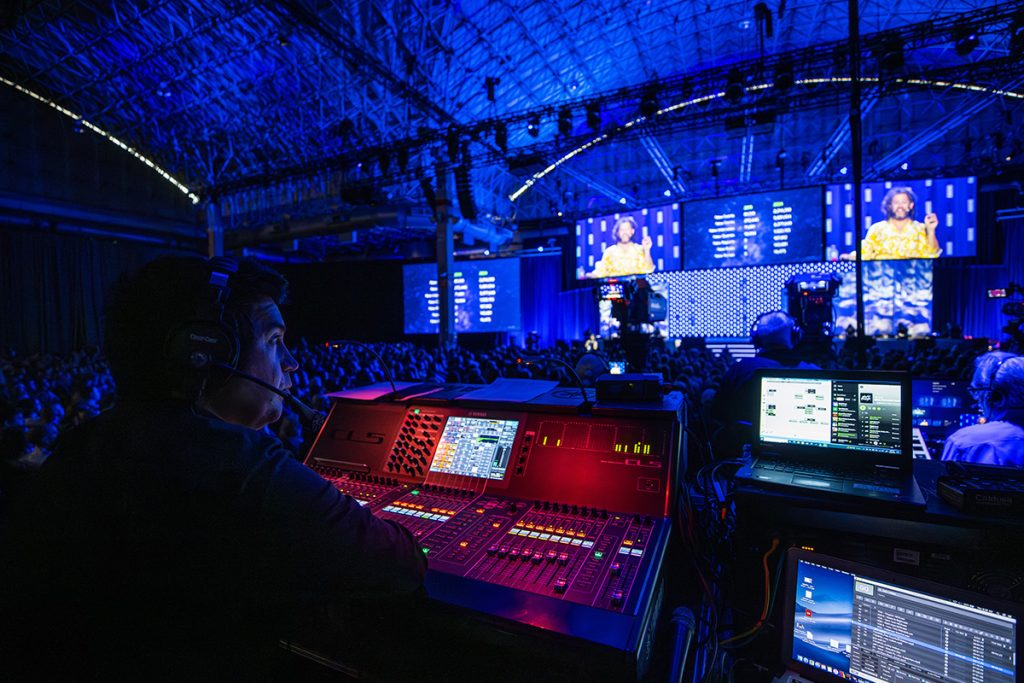
AV production is much more than putting microphones and screens on a stage. It involves coordinating audio systems, video production, lighting design, LED displays, presentation systems, stage technology, streaming equipment and technical teams to create one seamless experience.
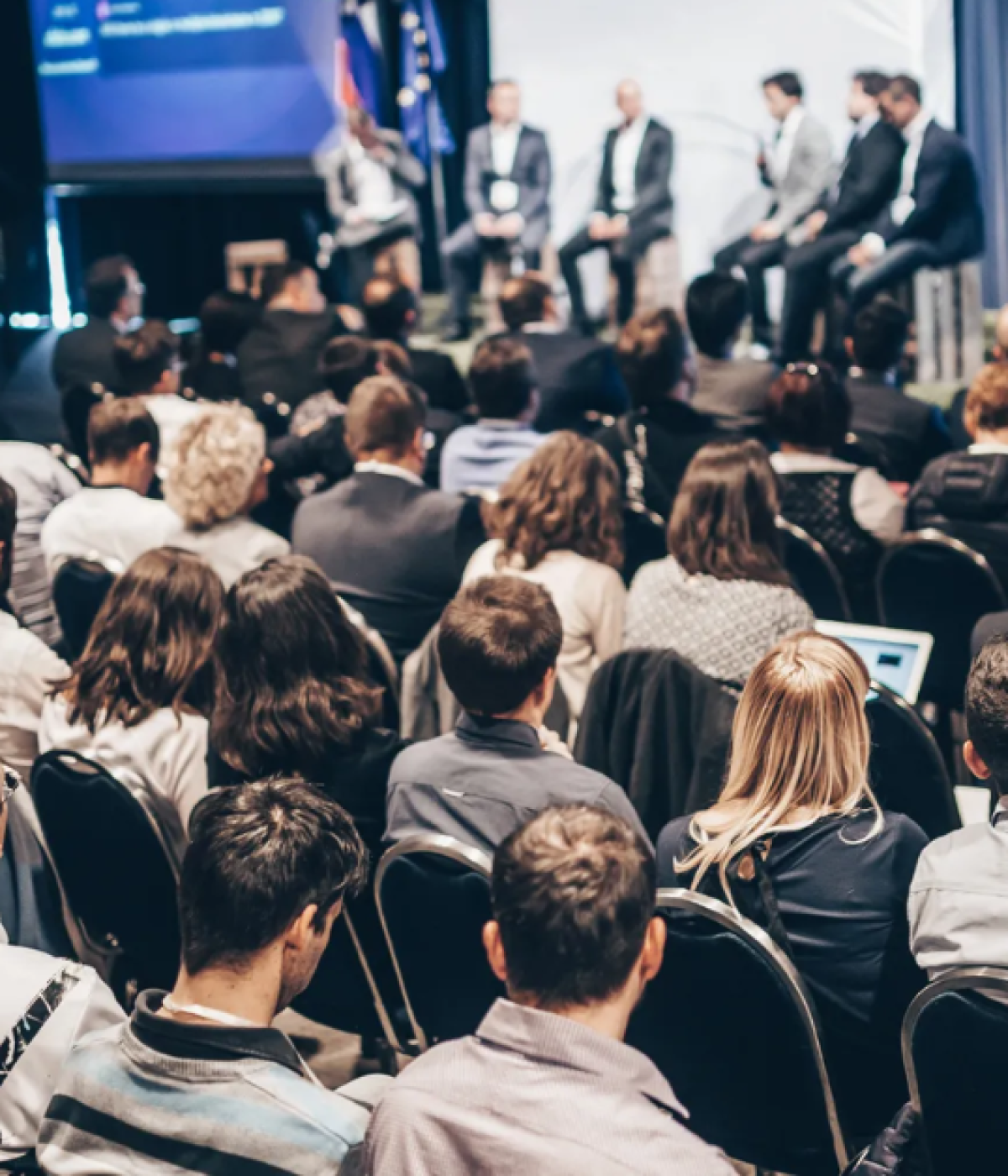
For conferences, the audience needs to hear every speaker clearly and see every presentation without distraction. For brand events, AV production also becomes part of the visual identity, helping communicate the brand message through lighting, motion graphics, sound and immersive content.
A strong AV production plan ensures that technology supports the event instead of becoming a source of disruption.
Start With the Event Format and Audience Experience
Before selecting AV equipment, understand what the event needs to achieve. A 100-person leadership conference will require a very different AV setup from a 2,000-person product launch.
Consider the venue size, audience capacity, stage configuration, number of speakers, presentation requirements, brand visibility and whether the event will be recorded or livestreamed. These factors determine everything from microphone selection and speaker placement to LED screen size and camera requirements.
The objective should always be simple: make the event easy to see, hear, understand and experience.
Build a Strong Audio Setup for Crystal-Clear Communication
Poor audio is one of the fastest ways to damage an otherwise impressive event. Even the most visually stunning conference can lose audience attention when speakers cannot be heard properly.
A professional conference AV setup should include the right combination of wireless microphones, lapel microphones, handheld microphones, podium microphones, speakers, amplifiers and audio mixers. The equipment must also be tested according to the venue’s acoustics.
Sound checks should account for different areas of the room rather than focusing only on the front rows. The audience at the back should experience the same clarity as those sitting near the stage.
Also read – 7 Powerful Lessons from Tokyo Earthquake Engineering That Make Tall Buildings More Resilient
Choose the Right Microphones for Every Speaker
Not every speaker needs the same microphone. Panel discussions often work best with individual table microphones or wireless microphones, while keynote speakers may benefit from a lapel or headset microphone that allows greater movement.
For award ceremonies, interviews and audience interactions, handheld wireless microphones offer flexibility. Having backup microphones and batteries available is equally important because even reliable wireless systems can experience unexpected issues.
The goal of professional event audio production is not simply loudness. It is clarity, consistency and control.
Plan LED Screens and Visual Displays Carefully
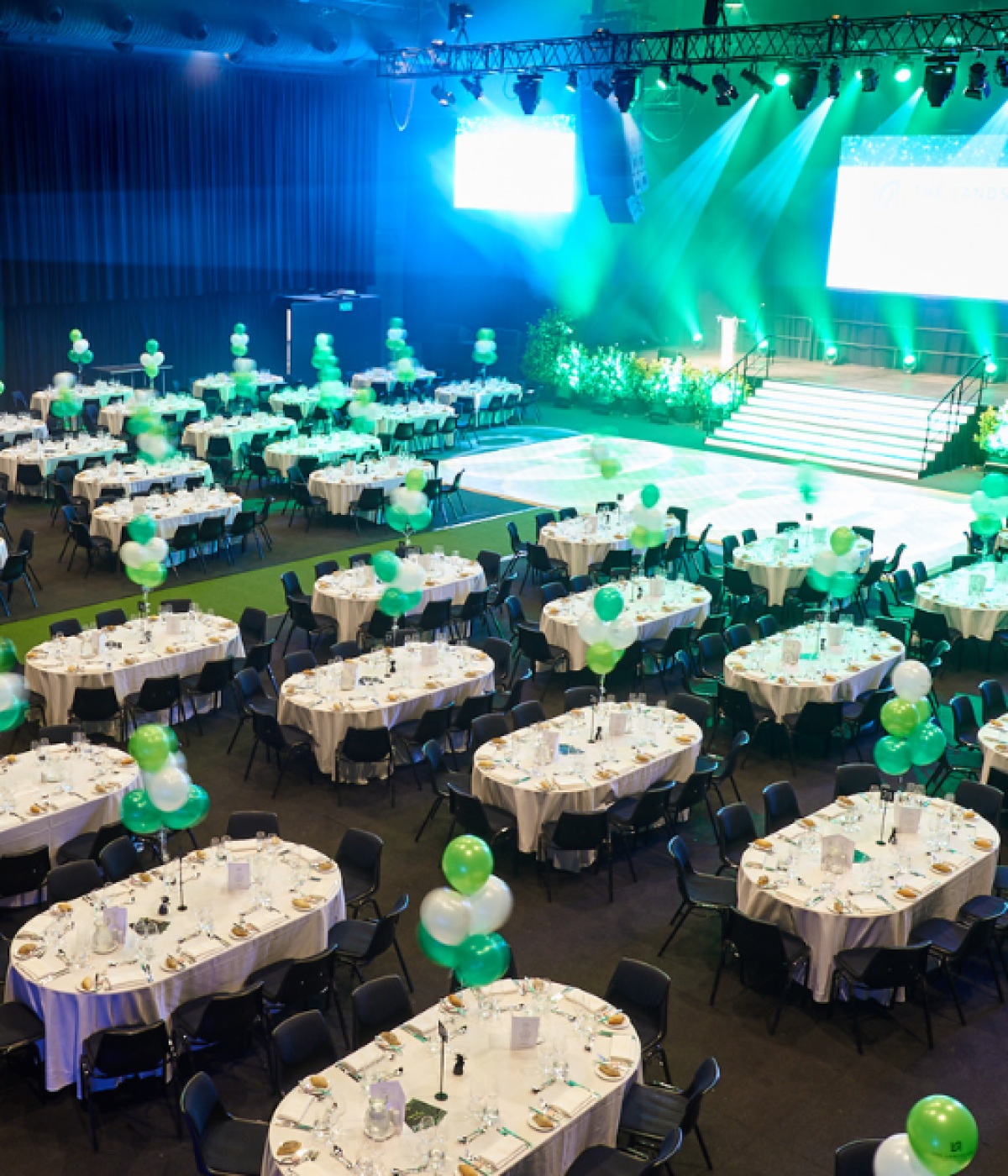
Visual communication is at the centre of modern conferences and brand events. LED walls, projection screens and confidence monitors help audiences follow presentations, videos, branding and live content.
The correct LED screen size and resolution should be determined by the venue dimensions and audience viewing distance. A screen that looks impressive from the front may still be difficult to read from the back.
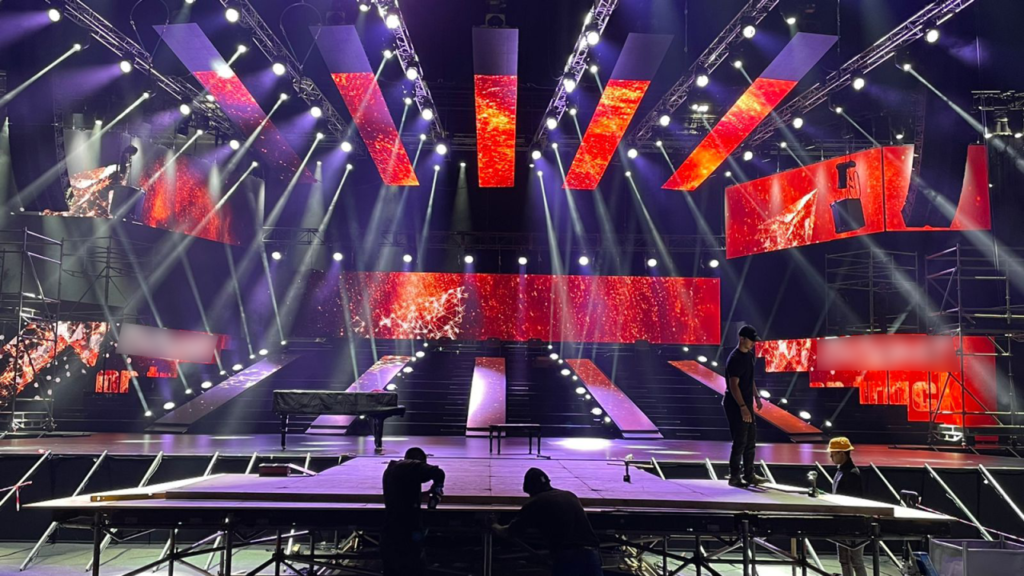
For brand events, LED screens can also become a major part of the stage design. Animated backgrounds, branded transitions, product visuals and motion graphics can transform a basic stage into a memorable visual experience.
Make Presentations Completely AV-Ready
One of the most common problems at conferences is presentation failure. Different laptops, file formats, fonts, videos and aspect ratios can create unexpected issues when content reaches the main screen.
All presentations should be collected and checked before the event begins. Videos should be tested with sound, fonts should be verified and slides should be reviewed for resolution and formatting.
A professional AV production checklist should also include a backup copy of every presentation and video. Technical preparation may take time, but it is far less stressful than solving a presentation problem while the speaker is already on stage.
Stage Lighting Should Support the Story
Lighting is not simply about making the stage brighter. Event lighting design can influence mood, focus, energy and brand perception.
Keynote sessions may require clean front lighting, while award ceremonies and brand launches can benefit from dynamic lighting effects. Architectural lighting, LED washes, moving lights and intelligent lighting systems can also create dramatic transitions between sessions.
Lighting should complement the stage design, camera requirements and brand colours without making the environment uncomfortable for the audience.
Never Ignore the Confidence Monitor
A confidence monitor may seem like a small part of AV production, but it can significantly improve speaker performance. It allows presenters to see their slides, timers, speaker notes or other essential information without turning away from the audience.
For conferences with multiple speakers, panel sessions and presentations, confidence screens help speakers remain connected with the audience while maintaining a smooth presentation flow.
The monitor should be positioned at an appropriate height and viewing angle so it is clearly visible to the speaker without becoming distracting.
Keep Video Production and Camera Coverage Ready
If an event is being recorded or livestreamed, video production needs to be planned from the beginning rather than treated as an additional requirement.
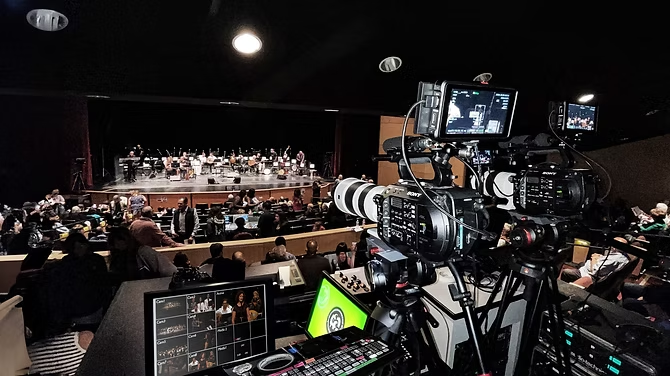
Camera positions should capture keynote speakers, panel discussions, audience reactions, product demonstrations and important brand moments. Multiple camera angles can make the final event video far more engaging.
For live event streaming, the production team should also test internet connectivity, encoding equipment, streaming platforms and backup connections. A stable network connection is essential for avoiding interruptions during a live broadcast.
Test Every Technical Connection Before Guests Arrive
Technical testing is one of the most important parts of successful event production. HDMI connections, laptops, clickers, microphones, speakers, cameras, lighting consoles, LED processors and presentation systems should all be tested before the audience enters.
A full AV rehearsal should ideally recreate the actual event sequence. This gives the production team an opportunity to identify technical gaps before they become visible to guests.
Testing should also include speaker walk-ons, video playback, presentation transitions, lighting cues and stage announcements.
Prepare for Power and Connectivity Problems
Even excellent AV equipment cannot perform without reliable power. Conferences and brand events often use large amounts of electrical equipment, including LED walls, lighting systems, audio equipment, cameras and production consoles.
The AV team should understand the venue’s power availability and distribution before installation begins. Appropriate power management, backup power solutions and safe cable routing can reduce the risk of technical failures.
Internet connectivity also deserves attention, particularly when the event includes live streaming, hybrid participation, cloud presentations or online audience interaction.
Plan Cable Management and Stage Safety
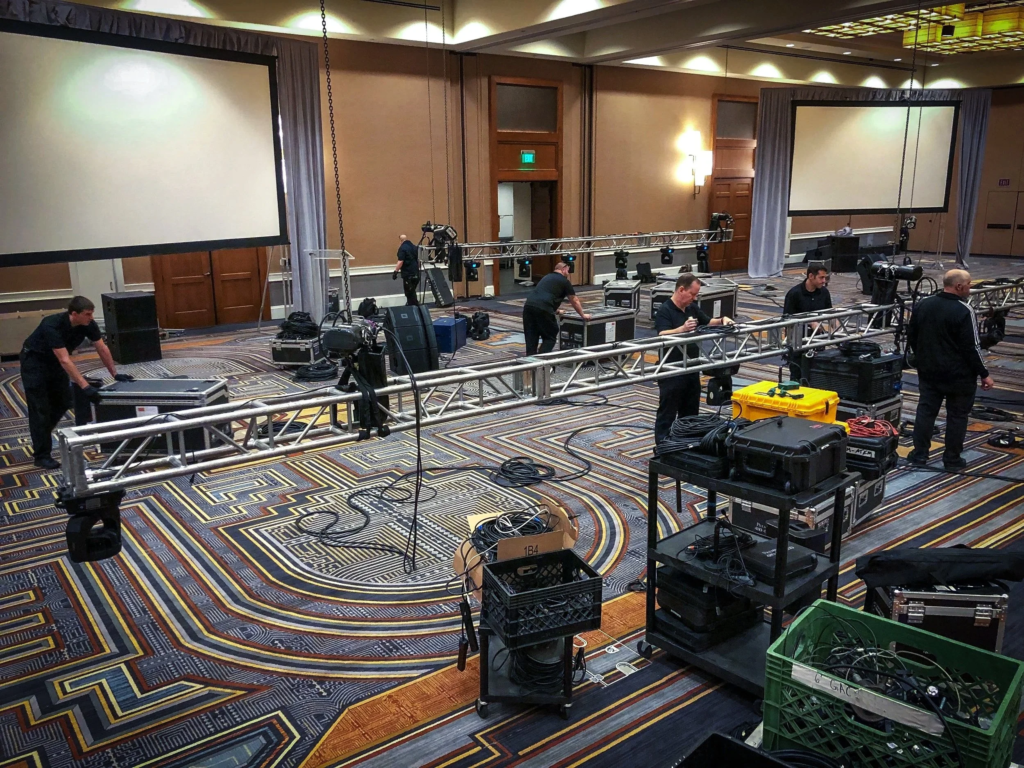
AV production involves a large number of cables running across stages, backstage areas and audience zones. Poor cable management can create both technical and safety problems.
Cables should be properly routed, secured and labelled. Walkways should remain clear, and equipment should be positioned safely away from audience movement.
A professional event production setup should look organised behind the scenes as well as in front of the audience. Good cable management also makes troubleshooting much faster when something goes wrong.
Build a Reliable Technical Team
Equipment alone cannot create a successful event. Experienced AV technicians, sound engineers, lighting operators, video engineers, camera operators and stage managers are essential for managing a complex production.
Every person should understand their role before the event begins. Communication between the AV production team, event organisers, speakers, stage managers and venue staff can prevent confusion during live sessions.
For large conferences, a dedicated show caller or technical director can coordinate cues and ensure that presentations, videos, lighting and audio happen at exactly the right moment.
Keep Backup Equipment Ready
A strong AV production strategy always plans for failure. Wireless microphones can stop working, laptops can crash, cables can fail and video files can become corrupted.
Backup microphones, laptops, presentation files, clickers, cables, adapters and batteries should be available wherever possible. Critical equipment should have a backup plan, particularly for high-profile conferences and brand launches.
The best technical production is often the one where the audience never realises that something almost went wrong.
Coordinate AV With Branding and Content
For brand events, AV production should work closely with the creative and branding teams. Screens, stage visuals, lighting, motion graphics, presentations and videos should follow a consistent visual language.
Brand colours, logos, typography, animations and campaign messaging need to appear consistently across every screen and digital touchpoint. This creates a more cohesive brand event experience.
When AV technology and creative design work together, the stage becomes more than a technical platform. It becomes an extension of the brand.
Don’t Forget Audience Interaction
Modern conferences increasingly use technology to make audiences part of the event. Live polls, Q&A platforms, interactive screens, social media walls and audience response systems can make sessions more engaging.
However, interactive technology should have a clear purpose. Too many digital elements can distract from the speaker or message.
The best conference AV solutions make participation easier without overwhelming the audience.
Conduct a Final Full-Show Rehearsal
A technical rehearsal should bring everything together. Speakers, stage managers, AV operators and event organisers should walk through the complete programme before guests arrive.
Every presentation, video, microphone change, lighting cue, walk-on, walk-off and transition should be tested in sequence.
This final rehearsal is where small technical issues become visible and can be corrected without pressure. It is one of the most effective ways to deliver a smooth and professional event.
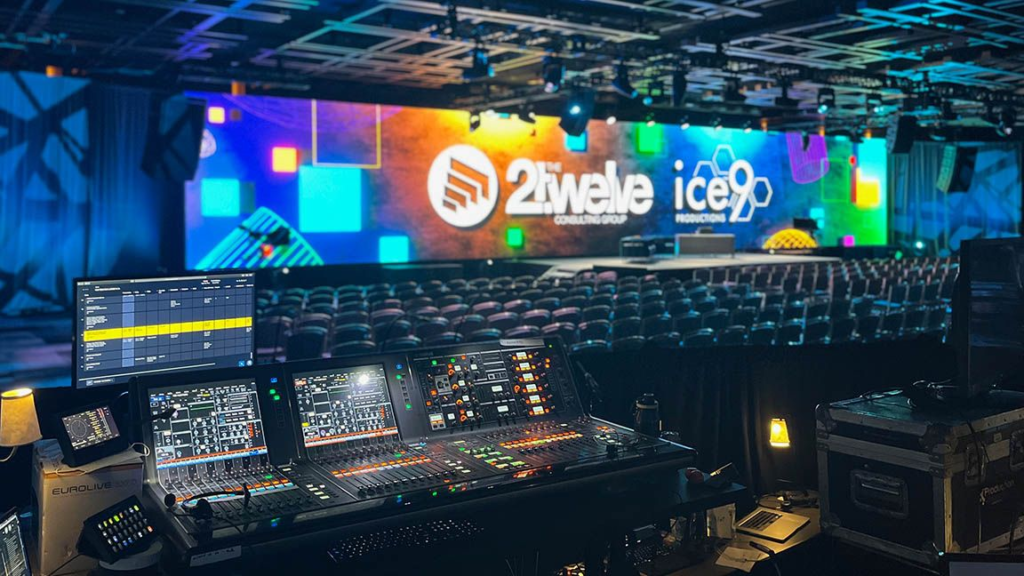
Create a Practical AV Production Checklist
The final AV production checklist should cover the entire event journey, from setup to show close. Confirm the audio system, microphones, speakers, LED screens, projectors, presentation laptops, video content, cameras, lighting, confidence monitors, internet connectivity, power supply and backup equipment.
More importantly, confirm that the technical team understands the event schedule and knows exactly when each cue needs to happen.
A checklist is valuable because successful event production depends on hundreds of small details working together.
The Final Takeaway: Great AV Should Feel Effortless
The strongest conference and brand event productions are not necessarily the ones with the most technology. They are the ones where technology works so smoothly that the audience can focus entirely on the content and experience.
From professional audio visual production and LED screens to stage lighting, live streaming, video production and technical rehearsals, every element has a role to play.
A carefully planned AV production checklist reduces technical risks, improves audience engagement and protects the event’s professional image. Whether you are producing a corporate conference, product launch, award night or large-scale brand experience, preparation is what turns complex technology into a seamless event.
When the sound is clear, visuals are sharp, transitions are effortless and every technical cue happens at exactly the right moment, AV production stops being something the audience notices and becomes something they simply remember.