How to Get Sponsors for a Corporate Event Without Sounding Salesy is one of the biggest questions event organizers face today. Whether you’re planning a conference, industry summit, design festival, networking event or experiential activation, sponsorships often play a crucial role in bringing ambitious ideas to life.
Yet many event professionals make the same mistake. They approach sponsorship conversations like a sales pitch. That’s one of the many reasons why proposals get ignored.
The reality is that sponsors aren’t looking for another branding opportunity. They’re looking for business value, meaningful audience engagement and partnerships that align with their goals.
The most successful sponsorship deals rarely start with “Can you sponsor our event?”
Instead, they begin with “Here’s how we can help you connect with the right audience.”
That small shift in mindset can completely transform how brands respond to your event.
The Biggest Sponsorship Myth
Many organizers assume sponsorship is about asking for money.
It isn’t.
At its core, sponsorship is an exchange of value. A sponsor invests because they believe your event can help them achieve something important:
- Brand visibility
- Industry positioning
- Lead generation
- Thought leadership
- Community engagement
- Market access
The moment your proposal focuses only on what you need, the conversation becomes transactional. The moment it focuses on what they gain, it becomes a partnership.
Before You Pitch Anyone, Understand Your Own Event
One of the most overlooked parts of sponsorship strategy happens before the first email is sent. You need absolute clarity on what your event represents.
Ask yourself:
| Question | Why It Matters |
| Who attends? | Sponsors care about audience quality |
| Why do people attend? | Helps identify sponsor alignment |
| What makes the event unique? | Creates differentiation |
| What business outcomes exist? | Gives sponsors measurable value |
| Can the event grow long-term? | Sponsors prefer scalable platforms |
Events with a strong identity are dramatically easier to sponsor than generic gatherings.
This is why successful event IPs such as industry festivals, design conferences and recurring forums often attract sponsors more easily as they’ve built a recognizable audience ecosystem over time.
Stop Selling Sponsorship. Start Selling Access.
Sponsors are not buying banners. They’re buying access.
Access to:
- Decision-makers
- Industry leaders
- Future customers
- Niche communities
- Professional networks
Think about it from a sponsor’s perspective. Would they rather see their logo on a backdrop? Or have meaningful conversations with 500 highly relevant professionals?
The answer is obvious.
That’s why modern sponsorship strategies focus less on visibility and more on engagement. The best sponsorship opportunities create experiences, not advertisements.
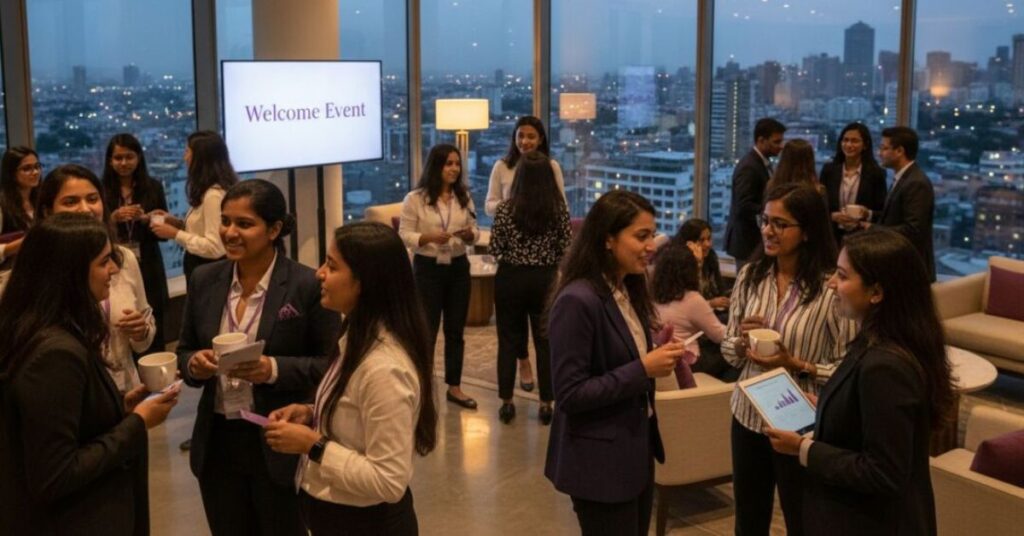
Corporate networking event with professionals engaging in discussions and branded experience zones.
Credits: https://teami.org/7-essential-tips-networking-events-for-young-professionals/
Also Read: Creative Corporate Event Setup: Designing Experiences Through Architecture
The Most Effective Sponsorship Proposals Feel Personal
One reason many sponsorship emails fail is because they feel mass-produced. Sponsors receive countless requests every year.
Most look identical.
The strongest sponsorship proposals demonstrate that you’ve done your research. Instead of saying “We would love your support.”
Try saying “Your focus on workplace innovation aligns closely with our audience of corporate decision-makers and business leaders.”
That single sentence shows relevance, preparation and strategic thinking.
People are far more likely to respond when they feel specifically chosen rather than randomly approached.
Give Sponsors a Story, Not Just a Rate Card
A sponsorship deck filled only with pricing tiers rarely excites anyone.
Gold Sponsor. Silver Sponsor. Bronze Sponsor.
Most brands have seen that format hundreds of times. Instead, tell a story.
Explain:
- Why the event exists
- What audience it serves
- What industry challenge it addresses
- What conversations it creates
- How sponsors become part of that experience
When sponsors understand the bigger picture, they begin seeing themselves as contributors rather than advertisers.
That’s a much more valuable position to occupy.
The Best Sponsorships Feel Authentic
Today’s audiences are extremely good at spotting forced branding. If sponsorship feels intrusive, people ignore it.
If sponsorship enhances the experience, people engage with it. For example, instead of logo walls, generic banners and constant promotional messaging.
Consider:
- Sponsored networking lounges
- Interactive experiences
- Industry knowledge sessions
- Thought leadership panels
- Product demonstrations tied to audience needs
The goal is integration, not interruption.
Relationships Often Matter More Than Proposals
Many successful sponsorship deals don’t happen because of a perfect deck. They happen because of relationships.
The event industry is built on trust. Sponsors are more comfortable investing when they:
- Know the organizers
- Understand the event vision
- Believe in long-term growth
- See consistency in execution
This is why networking remains one of the most effective sponsorship acquisition strategies. Sometimes a coffee meeting creates more of an opportunity than twenty sponsorship emails.

Business professionals networking during a corporate event and discussing partnership opportunities.
Credits: https://ivanmisner.com/easier-introductions-at-networking-events/
Think Beyond One Event
One mistake many organizers make is treating sponsorship as a one-time transaction. The strongest sponsorship relationships are built around continuity.
Sponsors increasingly look for:
- Year-round visibility
- Ongoing audience engagement
- Content collaborations
- Multi-event partnerships
- Long-term association
This is especially true for recurring event properties and industry platforms. A sponsor is far more likely to invest when they see future opportunities beyond a single event date.
In many ways, sponsorship today resembles community building more than advertising.
Data Helps Remove Guesswork
Sponsors appreciate creativity. But they love data. Whenever possible, provide information such as:
| Metric | Why Sponsors Care |
| Audience size | Indicates scale |
| Industry profile | Shows relevance |
| Seniority levels | Demonstrates influence |
| Social reach | Measures visibility |
| Engagement rates | Reflects audience quality |
Data transforms sponsorship conversations from assumptions into business discussions.
The Follow-Up Is Often Where Deals Happen
Many organizers send one proposal and move on.
That’s a mistake.
Sponsors are busy.
A lack of response often means timing not rejection. Professional follow-ups show:
- Persistence
- Seriousness
- Commitment
The key is to remain helpful rather than pushy. Instead of asking “Have you decided?”
Try sharing:
- Event updates
- Speaker announcements
- Audience growth milestones
- New partnership opportunities
This keeps the conversation active without creating pressure.
What Sponsors Really Want
After all the presentations, proposals, meetings, and negotiations, most sponsors are looking for the same thing that is value. They want to know:
- Who will they reach?
- Why does it matter?
- How will success be measured?
- What makes this opportunity different?
If you can answer those questions clearly, sponsorship conversations become much easier. Because you’re no longer asking for support. You’re presenting an opportunity.
Final Thoughts
How to Get Sponsors for a Corporate Event Without Sounding Salesy ultimately comes down to perspective. The most successful event organizers don’t approach sponsors as funders, they approach them as partners.
By focusing on audience value, authentic engagement, relationship-building and long-term collaboration, sponsorship conversations become more meaningful and far more effective.
In today’s experience-driven event landscape, sponsors aren’t simply looking for visibility.
They’re looking for relevance.
And the organizers who understand that are the ones who build lasting sponsorship relationships that grow year after year.