Event Post-Production Guide: Photos, Videos and Follow-Up Content is one of the most overlooked yet powerful stages of event management. While months are spent planning venues, guest experiences, stage production, and logistics, many brands lose momentum once the event ends. In reality, the conclusion of an event marks the beginning of another equally important phase that is post-production.
The photographs, videos, testimonials, highlight reels, social media posts, and follow-up communication created after an event determine how long the experience stays alive in the minds of attendees. They also become valuable marketing assets that extend an event’s reach, strengthen brand recall, and generate excitement for future editions.
Whether it’s a corporate conference, dealer meet, product launch, awards night, or brand activation, successful event management doesn’t end when the lights go off. It continues through strategic storytelling that transforms one-day experiences into long-term brand value.
The Event May End, But the Story Has Just Begun
Think about the last memorable event you attended.
Chances are, you saw highlight videos on LinkedIn, photographs on Instagram, recap emails in your inbox, or behind-the-scenes clips shared over the following weeks.
Those weren’t afterthoughts. They were part of the event strategy from the very beginning.
Today’s audiences expect events to live beyond the venue, and brands that continue the conversation stay top of mind far longer than those that disappear after the closing session.
The most successful events are remembered because they continue telling their story long after the final applause.
Why Event Post-Production Matters
Post-production is more than editing photographs or creating a highlight video.
It captures the value of the event while extending its lifespan across multiple platforms.
Done well, it helps brands:
| Post-Production Goal | Business Benefit |
| Preserve event memories | Builds emotional brand recall |
| Generate marketing content | Fuels future campaigns |
| Increase social engagement | Extends digital reach |
| Thank attendees | Strengthens relationships |
| Showcase event success | Attracts sponsors and partners |
| Build credibility | Supports future registrations |
Instead of viewing content as documentation, leading brands treat it as a long-term marketing investment.
Photography Does More Than Capture Moments
Professional event photography tells the complete story of an event.
Rather than simply photographing speakers on stage, photographers should document every layer of the experience. That includes:
- Guest arrivals
- Registration moments
- Networking interactions
- Product displays
- Speaker engagement
- Audience reactions
- Award presentations
- Branding elements
- Team coordination
- Behind the scenes preparations
These authentic moments communicate the atmosphere far better than posed group photographs alone.
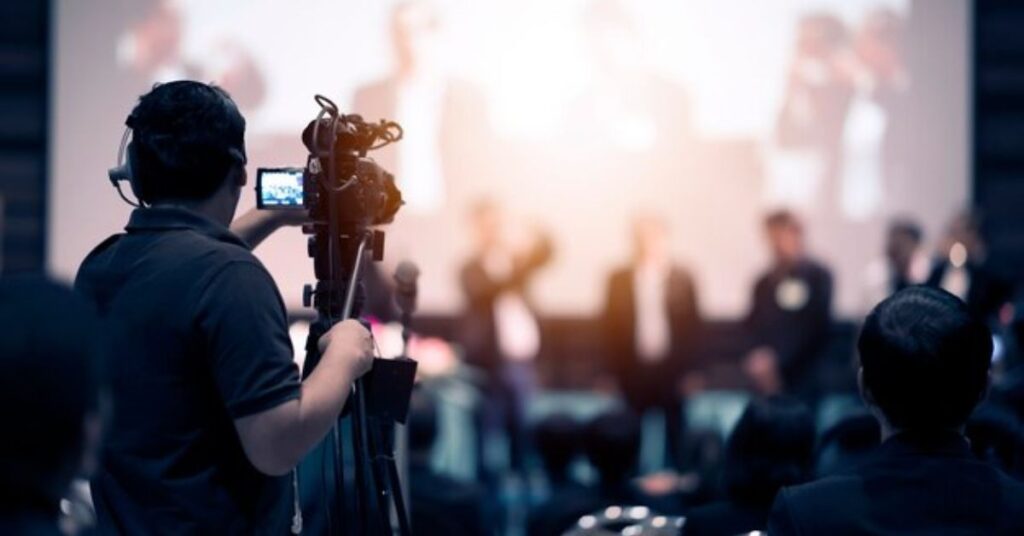
Professional photographer capturing candid moments during a corporate event.
Great event photography allows people who weren’t present to understand what the experience felt like.
Video Brings the Event Back to Life
If photography captures moments, video captures emotion.
A well-produced event film combines visuals, sound, movement, and storytelling into a memorable narrative.
Rather than recording the entire event, modern brands typically produce several types of video content.
| Video Type | Purpose |
| Event Highlight Reel | Showcase the overall experience |
| Speaker Snippets | Share thought leadership |
| Testimonial Videos | Build credibility |
| Behind-the-Scenes Content | Humanize the brand |
| Social Media Reels | Increase engagement |
| Future Event Teasers | Drive registrations |
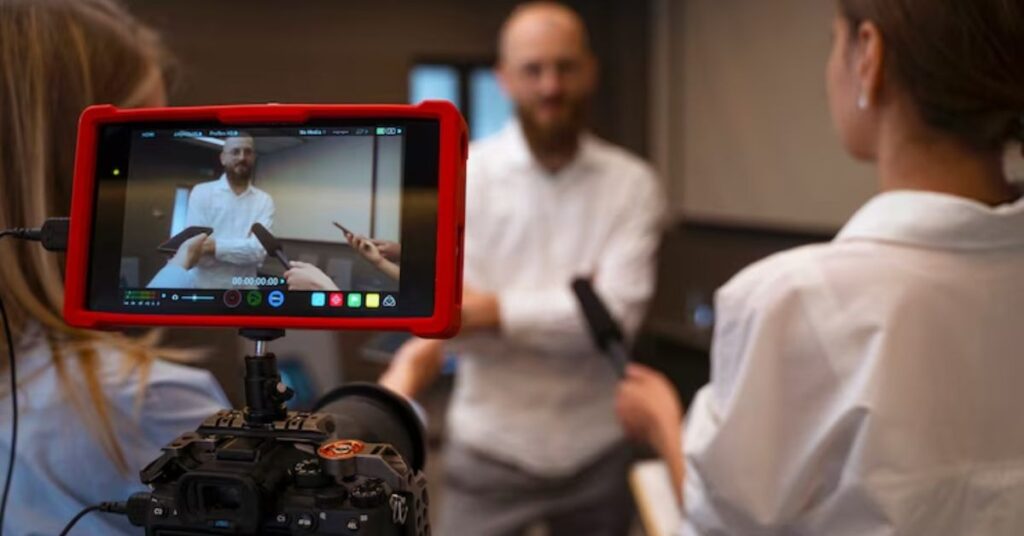
Videography team filming keynote sessions and audience interactions.
Instead of one long recap, multiple shorter videos allow brands to keep sharing content over several weeks.
Plan Content Before the Event Begins
One of the biggest mistakes brands make is thinking about content only after the event is over.
The strongest post-production begins during pre-production.
Content teams should already know:
Which speakers need interviews
Which sessions require filming
Which guests should be photographed
Which brand moments deserve close coverage
Which social platforms will be prioritized
Having a detailed content shot list ensures no important moments are missed during the event.
Social Media Doesn’t End with Live Coverage
Many brands focus heavily on live posting during the event but stop communicating the following day.
Instead, think of the event as content that can be distributed over several weeks. A typical post-event content calendar might include:
| Timeline | Content |
| Day 1 | Thank-you post and photo gallery |
| Week 1 | Highlight video |
| Week 2 | Speaker insights and quotes |
| Week 3 | Behind-the-scenes content |
| Week 4 | Attendee testimonials |
| Month 2 | Throwback moments and event impact |
This approach maximizes content value while maintaining audience engagement long after the event.
Don’t Forget the Human Stories
While stage production and venue design are important, audiences often connect most strongly with people.
Capture stories such as:
- A dealer receiving an award after years of partnership
- A keynote speaker sharing an unexpected insight
- Guests networking over shared interests
- Team members preparing behind the scenes
- Volunteers contributing to the event’s success
These stories make the content feel authentic rather than promotional.
People remember people.
Email Follow-Ups Keep Relationships Alive
The first email after an event should never be a generic thank-you message.
Instead, it should continue the experience. An effective follow-up email may include:
- A personalized thank-you note
- Event photo gallery
- Highlight video
- Presentation downloads
- Key takeaways
- Feedback survey
- Announcement for future events
This simple communication demonstrates professionalism while encouraging continued engagement.
User-Generated Content Adds Authenticity
Attendees often become the event’s best storytellers.
Encouraging participants to share photographs, videos, and personal experiences extends the event’s reach organically. Brands can amplify this by:
- Reposting attendee content
- Featuring guest testimonials
- Creating event hashtags
- Running post-event contests
- Highlighting audience perspectives
Authentic content from attendees often generates higher engagement than branded posts alone.
Also Read: How Employee Recognition Events Transform Team Performance and Employee Satisfaction
Measure the Success of Your Content
Creating content is only half the job. Understanding how it performs is equally important. Useful metrics include:
| Metric | Why It Matters |
| Social reach | Measures audience visibility |
| Video views | Indicates content engagement |
| Shares and saves | Reflect long-term value |
| Gallery downloads | Shows attendee interest |
| Website traffic | Tracks campaign impact |
| Survey responses | Provides qualitative insights |
These insights help improve future event strategies.
Build a Content Library for Future Campaigns
One successful event can generate months of marketing material.
Rather than storing photographs and videos in folders that are never revisited, organize them into a searchable content library. This archive becomes valuable for:
- Future event promotions
- Sponsorship proposals
- Corporate presentations
- Website updates
- Social media campaigns
- Recruitment initiatives
Every event should contribute to the brand’s long-term visual identity.
Why Professional Post-Production Matters
Editing is where raw footage becomes compelling storytelling. Professional editors carefully shape:
- Narrative flow
- Music selection
- Colour grading
- Motion graphics
- Brand consistency
- Sound design
- Visual pacing
The difference between a simple recording and a memorable event film often comes down to thoughtful editing.
The Event Lives On Through Content
An event may last a single day, but its impact can continue for months when supported by a strong post-production strategy.
Photography preserves moments. Videos capture emotion. Follow-up content strengthens relationships. Together, they transform live experiences into lasting brand assets.
For businesses investing significant time and resources into corporate events, dealer meets, conferences, and product launches, post-production offers one of the highest returns. It extends visibility, reinforces key messages, and ensures the event continues generating value long after the venue has been cleared.